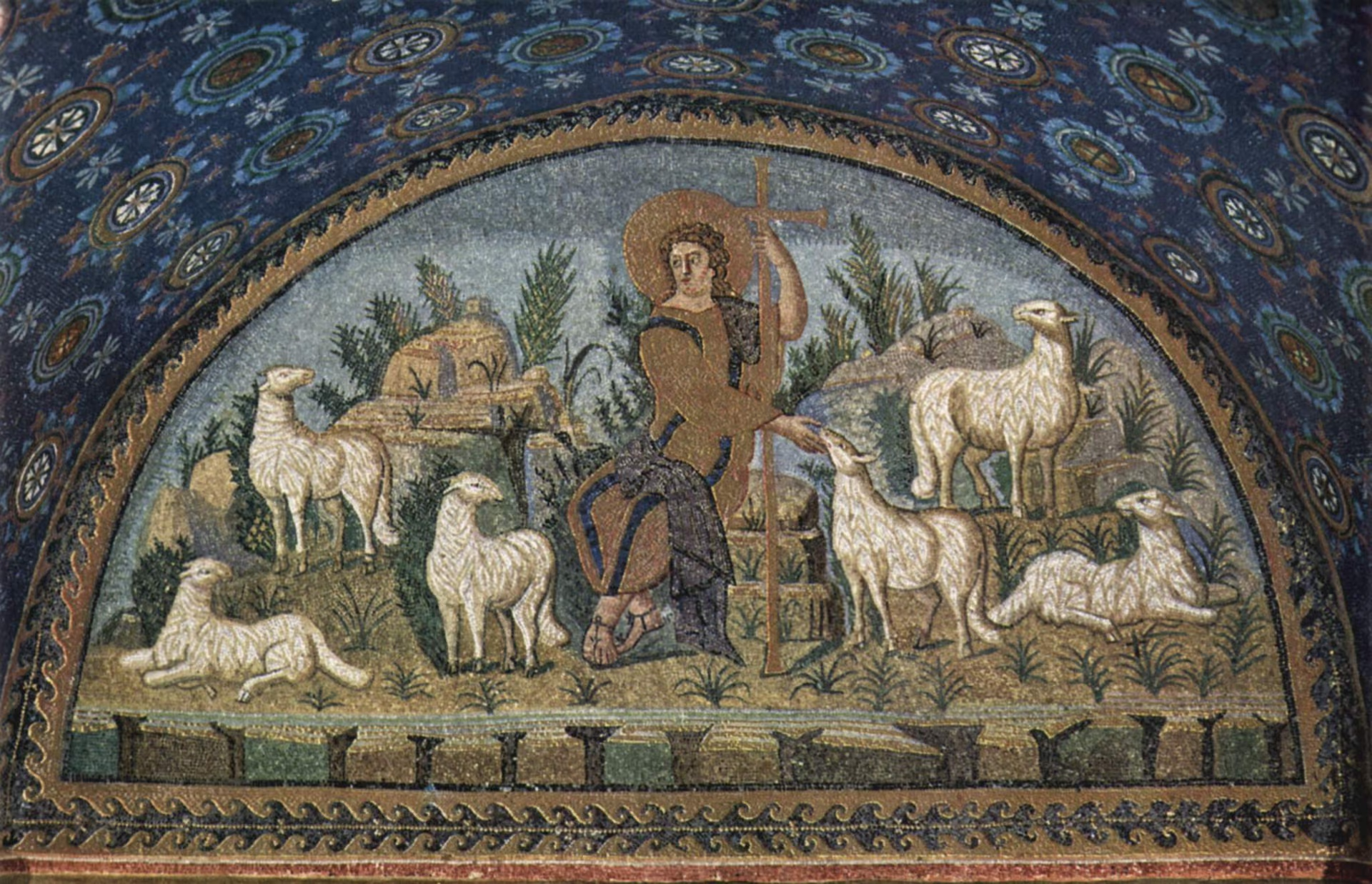
Fifth-century Good Shepherd mosaic in the Mausoleum of Galla Placidia, Ravenna.
Good Shepherd. 5th century, Mausoleum of Galla Placidia, Ravenna. Public domain.

4th – 7th centuries

Patristic and Conciliar

Nicene doxology, Byzantine, Syriac, Coptic, Armenian, Ethiopian and Latin lineages take shape.

Patristic and Conciliar spans the 4th through 7th centuries of twenty-one.

1st century21st century

No recordings published yet

The councils name the mystery; the churches set it to music.

In 313 the persecuted Church became a public one, and its song moved from the house to the basilica. The councils of these centuries — Nicaea, Constantinople, Chalcedon — argued the Church's confession into precision, and what the councils defined, the congregations sang.

Ambrose taught Milan hymns that Augustine wept to hear. Ephrem the Syrian wrote theology as poetry for choirs of women. In the East, Romanos composed sung sermons for the great feasts; in the West, the chant later named for Gregory began its long life. The Te Deum, this era's great act of praise, remains in daily use seventeen centuries on.

Music in this era was doctrine made memorable. The melodies carried the Creed further than any decree could.

Maker of all, eternal King, / who day and night about dost bring: / who weary mortals to relieve, / dost in their times the seasons give:

Ambrose of Milan · Aeterne rerum conditor · Latin as printed; English W. J. Copeland (1804–1885), via F. A. March, Latin Hymns (1894), as fetched

LatinAETERNE rerum conditor, / noctem diemque qui regis, / et temporum das tempora, / ut alleves fastidium;

CIAN INTERPRETATIONAmong the more secure Ambrosian hymns (Augustine and Bede mention it). The last printed doxology is later than Ambrose. The named hymn is band text beside the existing catalog player; this is not a claim that the live recording is Ambrose’s own tune.

  1. 325 and 381 are different creeds. Never paste 381 as Nicaea 325. No Filioque in the 4th-c. Greek.
  2. Te Deum is not on this page as Ambrose. In preparation as a row, not copy.
  3. “Gregorian” chant is later naming. No Gregory-authored melody. Aquinas is 13th c. and is NOT on this page.
  4. Coptic, Armenian, Ethiopian named gap, not copy.
  5. Athanasius §54 and Maximus not loaded. Do not invent them.
  6. Do not write “we can hear them sing.” Romanos’s original music is lost (Lash).
  7. Site photographs are later fabric. Not the 325 sitting, not a 381 photograph, not portraits.

Stay — Milan sister

SOURCE

Not long had the Church of Milan begun to employ this kind of consolation and exhortation, the brethren singing together with great earnestness of voice and heart. For it was about a year, or not much more, since Justina, the mother of the boy-Emperor Valentinian, persecuted Thy servant Ambrose in the interest of her heresy, to which she had been seduced by the Arians. The pious people kept guard in the church, prepared to die with their bishop, Thy servant. There my mother, Thy handmaid, bearing a chief part of those cares and watchings, lived in prayer. … At this time it was instituted that, after the manner of the Eastern Church, hymns and psalms should be sung, lest the people should pine away in the tediousness of sorrow; which custom, retained from then till now, is imitated by many, yea, by almost all of Thy congregations throughout the rest of the world. … And so I did the more abundantly weep at the singing of Thy hymns, formerly panting for Thee, and at last breathing in Thee, as far as the air can play in this house of grass.

Augustine · Confessions IX.7.15 · NPNF 1st series, vol. 1 · running page 135 on the fetched page

CIAN INTERPRETATIONHe says Milan had begun to sing “after the manner of the Eastern Church.” That is his memory, not a photograph of a melody. A Milan sister, not a substitute for the Ambrosian band.
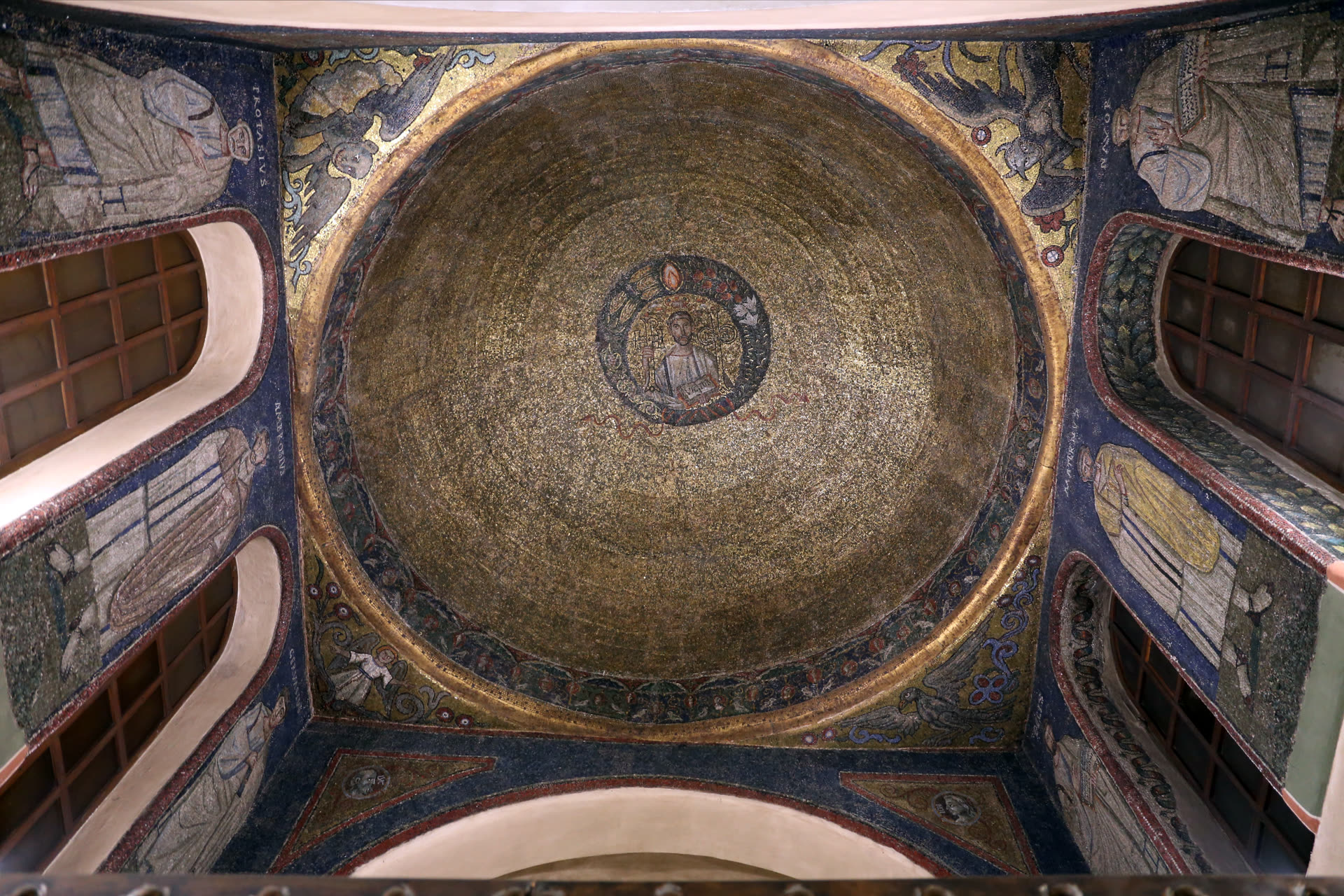
San Vittore in ciel d’oro, Sant’Ambrogio, Milan
Period tesserae. Not a 4th-c. photograph of Ambrose. A mosaic portrait of Ambrose in the same chapel is 5th-c. tesserae, not a life likeness; this file is the chapel view, not his face. Sacello_di_san_vittore_in_ciel_d'oro,_mosaici_del_450-500_dc_ca._01.jpg · Sailko, 15 April 2018 · CC BY 3.0.
  1. Nicaea, 325

    SOURCE

    We believe in one God, the Father Almighty, maker of all things visible and invisible; and in one Lord Jesus Christ, the Son of God, the only-begotten of his Father, of the substance of the Father, God of God, Light of Light, very God of very God, begotten, not made, being of one substance with the Father. By whom all things were made, both which be in heaven and in earth. Who for us men and for our salvation came down [from heaven] and was incarnate and was made man. He suffered and the third day he rose again, and ascended into heaven. And he shall come again to judge both the quick and the dead. And [we believe] in the Holy Ghost. And whosoever shall say that there was a time when the Son of God was not, or that before he was begotten he was not, or that he was made of things that were not, or that he is of a different substance or essence [from the Father] or that he is a creature, or subject to change or conversion—all that so say, the Catholic and Apostolic Church anathematizes them.

    Council of Nicaea · Creed of 325 · Percival, NPNF 2nd series, vol. 14 · Fordham page [3]

    CIAN INTERPRETATIONThe Spirit article is one line. The anathema belongs to 325. No Filioque. This is not the creed of 381.

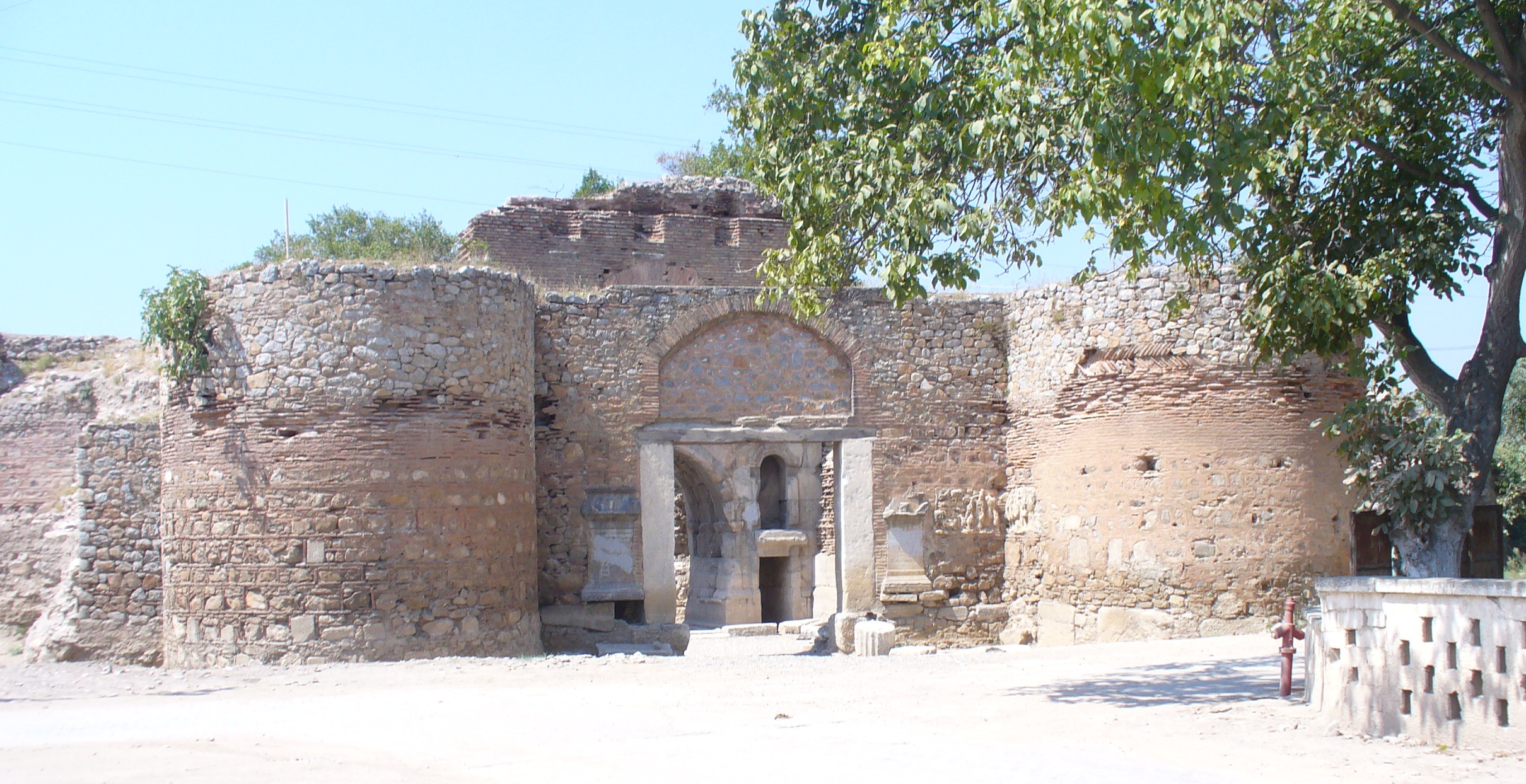
    Lefke Gate, İznik
    A Nicaea site object. Not the 325 sitting. Not the 787 Hagia Sophia. Commons caption says western ramparts; Wikipedia İznik places Lefke on the east. Both notes stay. Mixed fabric: Roman gate (AD 78–79) in a late-antique wall circuit, later Byzantine repair. Lefke_Kapisi_Iznik_932a.jpg · QuartierLatin1968, 30 August 2008 · CC BY-SA 3.0.
  2. Athanasius

    SOURCE

    For this purpose, then, the incorporeal and incorruptible and immaterial Word of God comes to our realm, howbeit he was not far from us before. For no part of Creation is left void of Him: He has filled all things everywhere, remaining present with His own Father. But He comes in condescension to show loving-kindness upon us, and to visit us. … He takes unto Himself a body, and that of no different sort from ours. … He prepares the body in the Virgin as a temple unto Himself, and makes it His very own as an instrument, in it manifested, and in it dwelling. … He gave it over to death in the stead of all, and offered it to the Father … that … He might turn them again toward incorruption, and quicken them from death by the appropriation of His body and by the grace of the Resurrection, banishing death from them like straw from the fire.

    For the Word, perceiving that no otherwise could the corruption of men be undone save by death as a necessary condition, while it was impossible for the Word to suffer death, being immortal, and Son of the Father; to this end He takes to Himself a body capable of death, that it, by partaking of the Word Who is above all, might be worthy to die in the stead of all, and might, because of the Word which had come to dwell in it, remain incorruptible, and that thenceforth corruption might be stayed from all by the Grace of the Resurrection.

    Athanasius · On the Incarnation §§8–9 · Robertson, NPNF 2nd series, vol. 4

  3. Ephrem

    SOURCE

    Blessed be that Child, Who gladdened Bethlehem to-day! Blessed be the Babe Who made manhood young again to-day! Blessed be the Fruit, Who lowered Himself to our famished state! Blessed be the Good One, Who suddenly enriched our necessitousness and supplied our needs! Blessed He Whose tender mercies made Him condescend to visit our infirmities!

    Glory to that Hidden One, Whose Son was made manifest! Glory to that Living One, Whose Son was made to die! Glory to that Great One, Whose Son descended and was small! Glory to the Power Who did straiten His greatness by a form, His unseen nature by a shape! With eye and mind we have beheld Him, yea with both of them.

    Ephrem · Hymns on the Nativity, Hymn II · Morris, NPNF 2nd series, vol. 13

    CIAN INTERPRETATIONBlessed the Shepherd Who became a Lamb for our reconcilement! Blessed the Branch Who became the Cup of our Redemption!

  4. Morning praise (compiled)

    SOURCE

    “Glory be to God in the highest, and upon earth peace, good-will among men.” We praise Thee, we sing hymns to Thee, we bless Thee; we glorify Thee, we worship Thee by Thy great High Priest; Thee who art the true God, who art the One Unbegotten, the only inaccessible Being. For Thy great glory, O Lord and heavenly King, O God the Father Almighty, O Lord God, the Father of Christ the immaculate Lamb, who taketh away the sin of the world, receive our prayer, Thou that sittest upon the cherubim. For Thou only art holy, Thou only art the Lord Jesus, the Christ of the God of all created nature, and our King, by whom glory, honour, and worship be to Thee.

    Apostolic Constitutions VII.47 · ANF vol. 7 · Donaldson

    CIAN INTERPRETATIONLate-4th compilation. Not the later Latin Mass Gloria. Not a secure 2nd-c. core. The main text, not the editor’s “more orthodox” footnote. Evening sister VII.48 is not a second door.

  5. Basil

    SOURCE

    In answer to the objection that the doxology in the form “with the Spirit” has no written authority, we maintain that if there is no other instance of that which is unwritten, then this must not be received. But if the greater number of our mysteries are admitted into our constitution without written authority, then, in company with the many others, let us receive this one. For I hold it apostolic to abide also by the unwritten traditions.

    I will now adduce another piece of evidence which might perhaps seem insignificant, but because of its antiquity must in nowise be omitted by a defendant who is indicted on a charge of innovation. It seemed fitting to our fathers not to receive the gift of the light at eventide in silence, but, on its appearing, immediately to give thanks. Who was the author of these words of thanksgiving at the lighting of the lamps, we are not able to say. The people, however, utter the ancient form, and no one has ever reckoned guilty of impiety those who say “We praise Father, Son, and God’s Holy Spirit.” And if any one knows the Hymn of Athenogenes, which, as he was hurrying on to his perfecting by fire, he left as a kind of farewell gift to his friends, he knows the mind of the martyrs as to the Spirit. On this head I shall say no more.

    Basil · On the Holy Spirit 29.71, 73 · NPNF 2nd series, vol. 8 · Jackson

    CIAN INTERPRETATIONEquating his unnamed thanksgiving with Φῶς ἱλαρόν is later identification, not his title.

  6. Constantinople, 381

    SOURCE

    We believe in one God, the Father Almighty, maker of heaven and earth and of all things visible and invisible. And in one Lord Jesus Christ, the only begotten Son of God, begotten of his Father before all worlds, Light of Light, very God of very God, begotten not made, being of one substance with the Father, by whom all things were made. Who for us men and for our salvation came down from heaven and was incarnate by the Holy Ghost and the Virgin Mary, and was made man, and was crucified also for us under Pontius Pilate. He suffered and was buried, and the third day he rose again according to the Scriptures, and ascended into heaven, and sitteth at the Right Hand of the Father. And he shall come again with glory to judge both the quick and the dead. Whose kingdom shall have no end. And [we believe] in the Holy Ghost, the Lord and Giver-of-Life, who proceedeth from the Father, who with the Father and the Son together is worshipped and glorified, who spake by the prophets. And [we believe] in one, holy, Catholic and Apostolic Church. We acknowledge one Baptism for the remission of sins, [and] we look for the resurrection of the dead and the life of the world to come. Amen.

    Council of Constantinople · Creed of 381 · Percival, NPNF 2nd series, vol. 14

    CIAN INTERPRETATION“Who proceedeth from the Father” only. No Filioque. Percival: exact 381 issue is disputed; Chalcedon 451 is where this wording is first securely read.

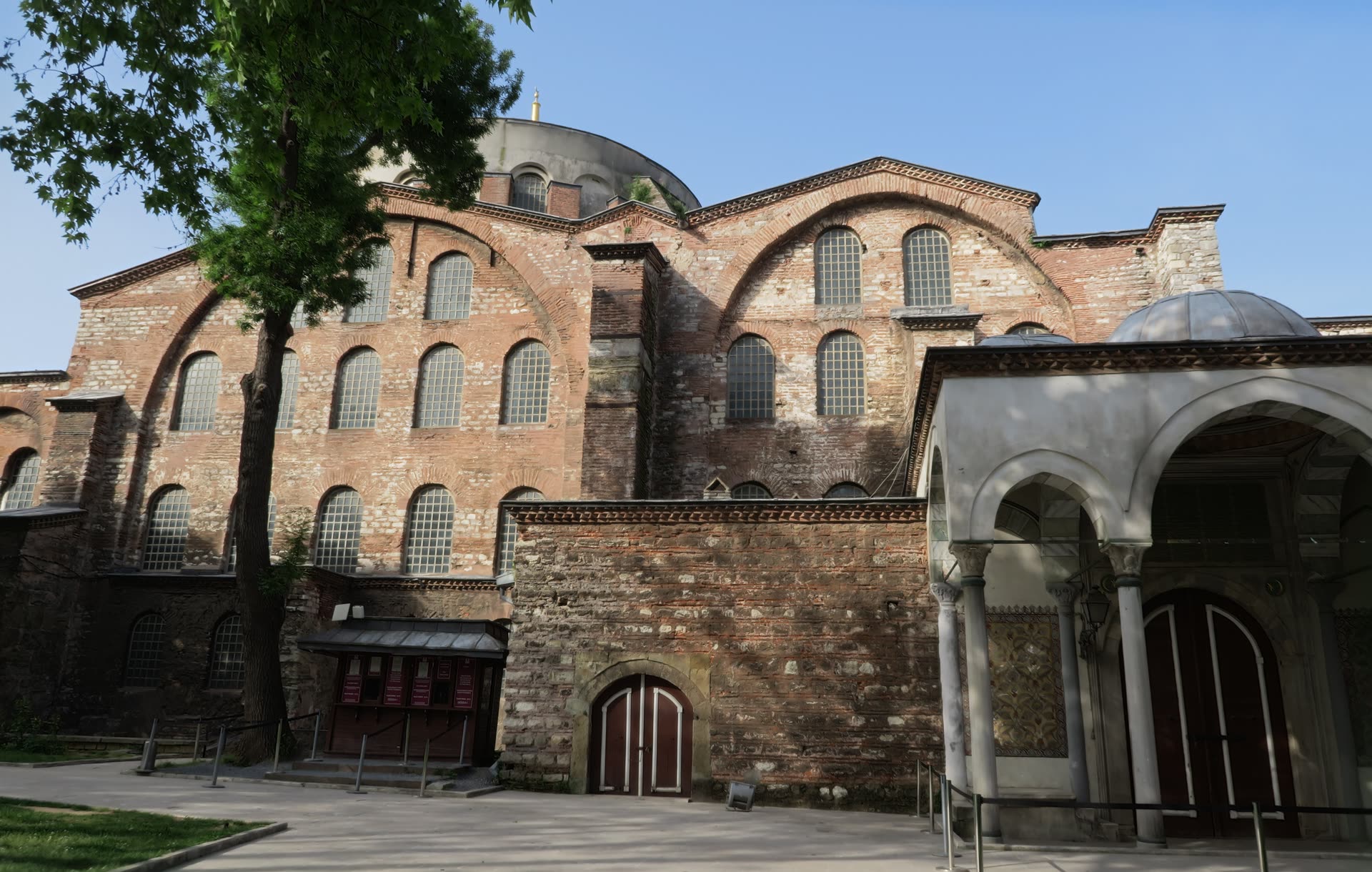
    Hagia Irene exterior, Constantinople
    381 meeting-place; standing church is later fabric (Justinianic after 532; upper parts after 740). Not a 381 photograph. Not 4th-c. masonry. Same file sits on the Gregory room. Hagia_Irene_exterior.JPG · Mattias Hill, 17 May 2015 · CC BY-SA 4.0.
  7. Gregory

    SOURCE

    The Father was the True Light which lightens every man coming into the world. The Son was the True Light which lightens every man coming into the world. The Other Comforter was the True Light which lightens every man coming into the world. Was and Was and Was, but Was One Thing. Light thrice repeated; but One Light and One God. This was what David represented to himself long before when he said, In Your Light shall we see Light. And now we have both seen and proclaim concisely and simply the doctrine of God the Trinity, comprehending out of Light (the Father), Light (the Son), in Light (the Holy Ghost).

    What then? Is the Spirit God? Most certainly. Well then, is He Consubstantial? Yes, if He is God.

    Gregory of Nazianzus · Theological Oration 31 §§3 and 10 · Browne & Swallow

    CIAN INTERPRETATIONAn oration, commonly placed at Constantinople in 380. Not the 381 creed. Not a hymn. Same Hagia Irene image. Not a portrait of Gregory.

    Hagia Irene exterior, Constantinople
    381 meeting-place; standing church is later fabric (Justinianic after 532; upper parts after 740). Not a 381 photograph. Not 4th-c. masonry. Same file sits on the Gregory room. Hagia_Irene_exterior.JPG · Mattias Hill, 17 May 2015 · CC BY-SA 4.0.
  8. Chalcedon, 451

    SOURCE

    Following the holy Fathers we teach with one voice that the Son [of God] and our Lord Jesus Christ is to be confessed as one and the same [Person], that he is perfect in Godhead and perfect in manhood, very God and very man, of a reasonable soul and [human] body consisting, consubstantial with the Father as touching his Godhead, and consubstantial with us as touching his manhood; made in all things like us, sin only excepted; begotten of his Father before the worlds according to his Godhead; but in these last days for us men and for our salvation born [into the world] of the Virgin Mary, the Mother of God according to his manhood. This one and the same Jesus Christ, the only-begotten Son [of God] must be confessed to be in two natures, unconfusedly, immutably, indivisibly, inseparably [united], and that without the distinction of natures being taken away by such union, but rather the peculiar property of each nature being preserved and being united in one Person and subsistence, not separated or divided into two persons, but one and the same Son and only-begotten, God the Word, our Lord Jesus Christ, as the Prophets of old time have spoken concerning him, and as the Lord Jesus Christ has taught us, and as the Creed of the Fathers has delivered to us.

    Council of Chalcedon · Definition of Faith · Percival, NPNF 2nd series, vol. 14

    CIAN INTERPRETATIONLeo’s Tome is its own next room, not a second Definition.

  9. Leo, Tome to Flavian

    SOURCE

    Accordingly while the distinctness of both natures and substances was preserved, and both met in one Person, lowliness was assumed by majesty, weakness by power, mortality by eternity; and, in order to pay the debt of our condition, the inviolable nature was united to the passible, so that as the appropriate remedy for our ills, one and the same Mediator between God and man, the Man Christ Jesus, might from one element be capable of dying and also from the other be incapable. Therefore in the entire and perfect nature of very man was born very God, whole in what was his, whole in what was ours.

    For each form does the acts which belong to it, in communion with the other; the Word, that is, performing what belongs to the Word, and the flesh carrying out what belongs to the flesh; the one of these shines out in miracles, the other succumbs to injuries.

    Leo of Rome · Tome to Flavian · Percival, NPNF 2nd series, vol. 14 · letter dated 13 June 449; read at Chalcedon 451

    CIAN INTERPRETATIONNot a second Definition.

  10. Romanos

    SOURCE

    Today the Virgin gives birth to him who is above all being, and the earth offers a cave to him whom no one can approach. Angels with shepherds give glory, and magi journey with a star, for to us there has been born a little Child, God before the ages.

    Bethlehem has opened Eden, come, let us see; we have found delight in secret, come, let us receive the joys of Paradise within the cave. There the unwatered root whose blossom is forgiveness has appeared. There has been found the undug well from which David once longed to drink. There a virgin has borne a babe and has quenched at once Adam’s and David’s thirst. For this, let us hasten to this place where there has been born a little Child, God before the ages.

    Romanos the Melodist · Kontakion on the Nativity, prelude + oikos 1 · Ephrem Lash 1995

    CIAN INTERPRETATIONEnglish only. Original music lost (Lash). Do not back-date to Ephrem’s Edessa.

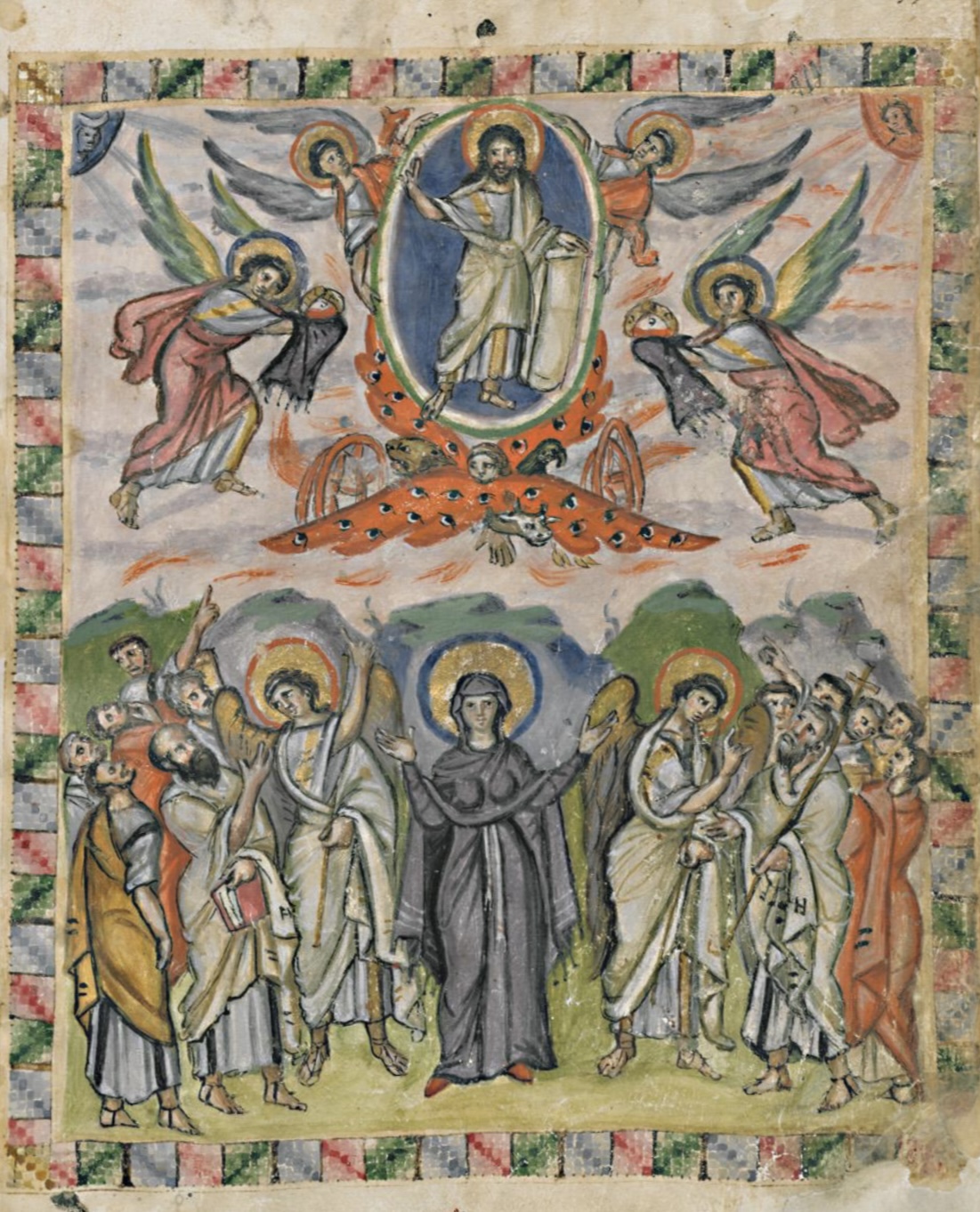
    Rabbula Gospels, Folio 13v, Ascension
    A 6th-c. Syriac gospel illumination. Not a portrait of Romanos. Not a score. Rabbula_Gospels_Folio_13v_Ascension.jpg · completed 586 · Biblioteca Medicea Laurenziana, Florence, Plut. I.56 · Commons Public Domain Mark 1.0.

Named gaps. Not copy.

  • Te Deum
  • chant later named for Gregory
  • Coptic, Armenian, Ethiopian
  • Athanasius §54
  • Maximus
  • Prudentius

Listen

Recordings

No recordings published yet

This era is documented but not yet recorded. The lineages below describe what it holds.

Traditions within this era

Lineages

  • Latin Hymnody

    Fourth-century Milan and beyond · Europe

    The lineage of Ambrose, Prudentius, and later Aquinas — office hymns that shape Latin sung prayer for a thousand years.

    Latin

  • Syriac Hymnody

    Fourth-century Edessa and Nisibis · Middle East

    Rooted in Ephrem the Syrian and the madrasha tradition, Syriac hymnody sings the mysteries of the incarnation and the Trinity in vivid, image-laden poetry.

    Syriac