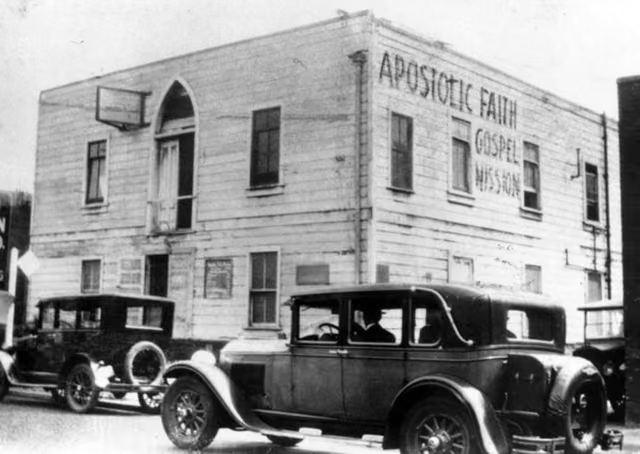
The Apostolic Faith Mission on Azusa Street, Los Angeles, photographed in 1907.
The Apostolic Faith Mission, Azusa Street. 1907, Los Angeles. Public domain.

20th century

Modern Global Gospel

Black gospel, Pentecostal worship, African Independent Church music, and worldwide praise movements.

Modern Global Gospel spans the 20th century of twenty-one.

1st century21st century

No recordings published yet

Recorded sound carries the gospel farther in one century than in the previous twenty.

The twentieth century gave sacred song two new instruments: the microphone and the radio. For the first time, a congregation's music could outlive the service and cross an ocean in a week.

The revival at Azusa Street in 1906 released a pentecostal stream of song that now circles the globe. Charles Tindley's hymns prepared the way for gospel music; Thomas Dorsey joined it to the blues and built its institutions; Mahalia Jackson gave it a voice the whole world recognized.

By century's end the center of gravity had moved. Most of the world's Christian singers now worshiped outside Europe and North America, in languages and rhythms the older hymnals never imagined.

When the storms of life are raging, stand by me; when the storms of life are raging, stand by me. When the world is tossing me like a ship upon the sea, thou who rulest wind and water, Stand by me. In the midst of tribulation, stand by me; in the midst of tribulation, stand by me. When the hosts of hell assail, and my strength begins to fail, thou who never lost a battle, stand by me.

Charles Albert Tindley · Stand By Me · Soul Echoes No. 2, 1909, no. 2, as printed on Hymnary · copyright line on that page: 1905, by C. A. Tindley · arr. F. A. Clark

CIAN INTERPRETATIONSOURCE: The singer asks the one who rules wind and water to stand by him in storm, tribulation, hell’s assault, and failing strength. CIAN INTERPRETATION: Early printed Black gospel, not a collected 19th-c. spiritual. The 1905 copyright is a 20th-c. author’s print. MODEL INFERENCE: Philadelphia as Tindley’s pastorate is standard bibliography, not a colophon on the Hymnary lyric block. The same 1909 page continues through five stanzas, including “thou who saved Paul and Silas” and “O thou ‘Lily of the Valley.’” The 1905 first-edition leaf was not opened. The 1909 page has an OCR slip “Ssand” for “Stand”; the extract uses the printed wording as given above. Player: a setting of Stand By Me. Not a claim that this is Tindley’s 1905/1909 leaf. NO Soul Echoes title image — that is a gap.

  1. Tindley is 20th-c. print, not a 19th-c. spiritual. 1905 copyright / 1909 and 1916 books. Do not row him as Awakening.
  2. 1905 Soul Echoes ≠ 1909 No. 2 leaf. This pass opened 1909 Hymnary pages. No 1905 title was downloaded.
  3. Dorsey 1932 writing ≠ 1938 publication. Still in copyright. First stanza only. Do not invent stanzas.
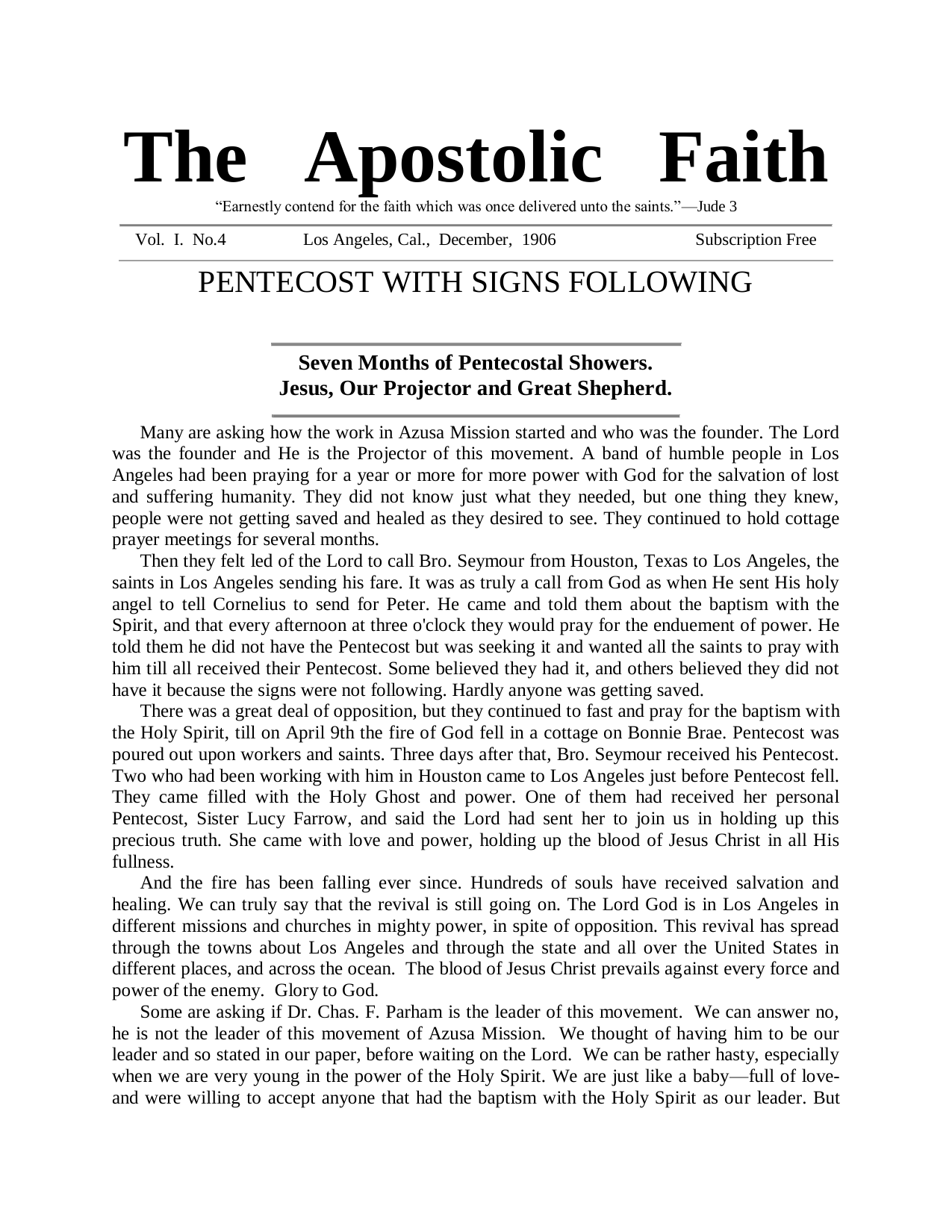
  4. Seymour’s voice is the 1906 quotation, not a reconstructed sermon. The Sept. 1906 paper still prints a Parham letter; the Dec. 1906 paper later denies Parham as Azusa’s leader. Both are on the papers.
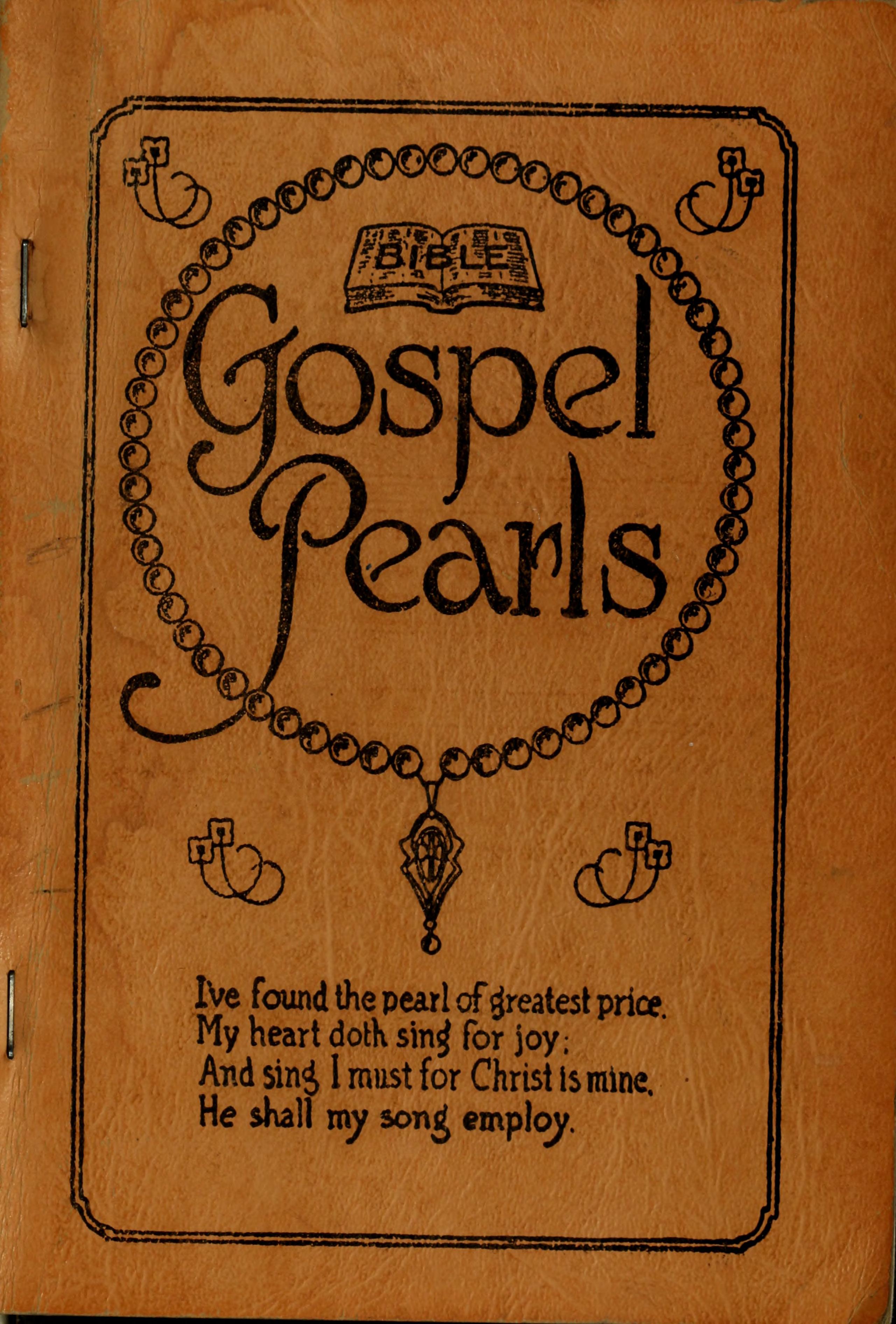
  5. Campbell Something Within is not in Gospel Pearls 1921. The Lord Is My Shepherd is the 1921 Campbell hymn. The 1921 image is the cover, not her lyric leaf.
  6. Shembe Hymn 3 isiZulu is Sithole’s printing, not a 1940 leaf we opened. Still in copyright. Short extract only. Do not invent further Zulu.
  7. Silouan English is Edmonds / Sophrony, not 4th-c. Greek. Still in copyright. Short extract only.
  8. Siyahamba authorship is unsettled (van Tonder / traditional / Mkize). 1984 Nyberg is still in copyright. Short extract only.
  9. The Dec. 1906 image is the issue, not the F. E. Hill lyric leaf.
  10. Do not write “hear Mahalia,” “hear Azusa,” or “we can hear them sing.” Underground Railroad is not a 20th-c. SOURCE. No Living Global. Hippolytus stays off. Do not print 381 as 325. No Filioque as 4th-c. Greek.

Stay — Tindley, We’ll Understand It Better By and By

SOURCE

We are tossed and driven on the restless sea of time. Sombre skies and howling tempest oft succeeds a bright sunshine, In that land of perfect day, when the mists have roll’d away, We will understand it better by and by. By and by when the morning comes, All the saints of God are gathered home, We’ll tell the story how we’ve overcome, For we’ll understand it better by and by.

Charles Albert Tindley · We’ll Understand It Better By and By · Soul Echoes No. 2, 1909, no. 30, as printed on Hymnary · copyright 1905, by C. A. Tindley · arr. F. A. Clark

SOURCE

The singers are tossed on time’s sea; in the land of perfect day they will understand; the refrain gathers the saints home to tell how they overcame.

Charles Albert Tindley · We’ll Understand It Better By and By · Soul Echoes No. 2, 1909, no. 30, as printed on Hymnary · copyright 1905, by C. A. Tindley · arr. F. A. Clark

CIAN INTERPRETATION

A second early Tindley print. “By and by” here is Tindley’s 1905 gospel hymn, not the 19th-c. “In the sweet by and by” and not a collected spiritual.

Charles Albert Tindley · We’ll Understand It Better By and By · Soul Echoes No. 2, 1909, no. 30, as printed on Hymnary · copyright 1905, by C. A. Tindley · arr. F. A. Clark

MODEL INFERENCE

none as to the 1909 wording. McKinney’s 1937 reordering is a later shape, not this extract.

Charles Albert Tindley · We’ll Understand It Better By and By · Soul Echoes No. 2, 1909, no. 30, as printed on Hymnary · copyright 1905, by C. A. Tindley · arr. F. A. Clark

CIAN INTERPRETATIONNo 1909 Fig. 1 image.
  1. Azusa, September 1906

    SOURCE

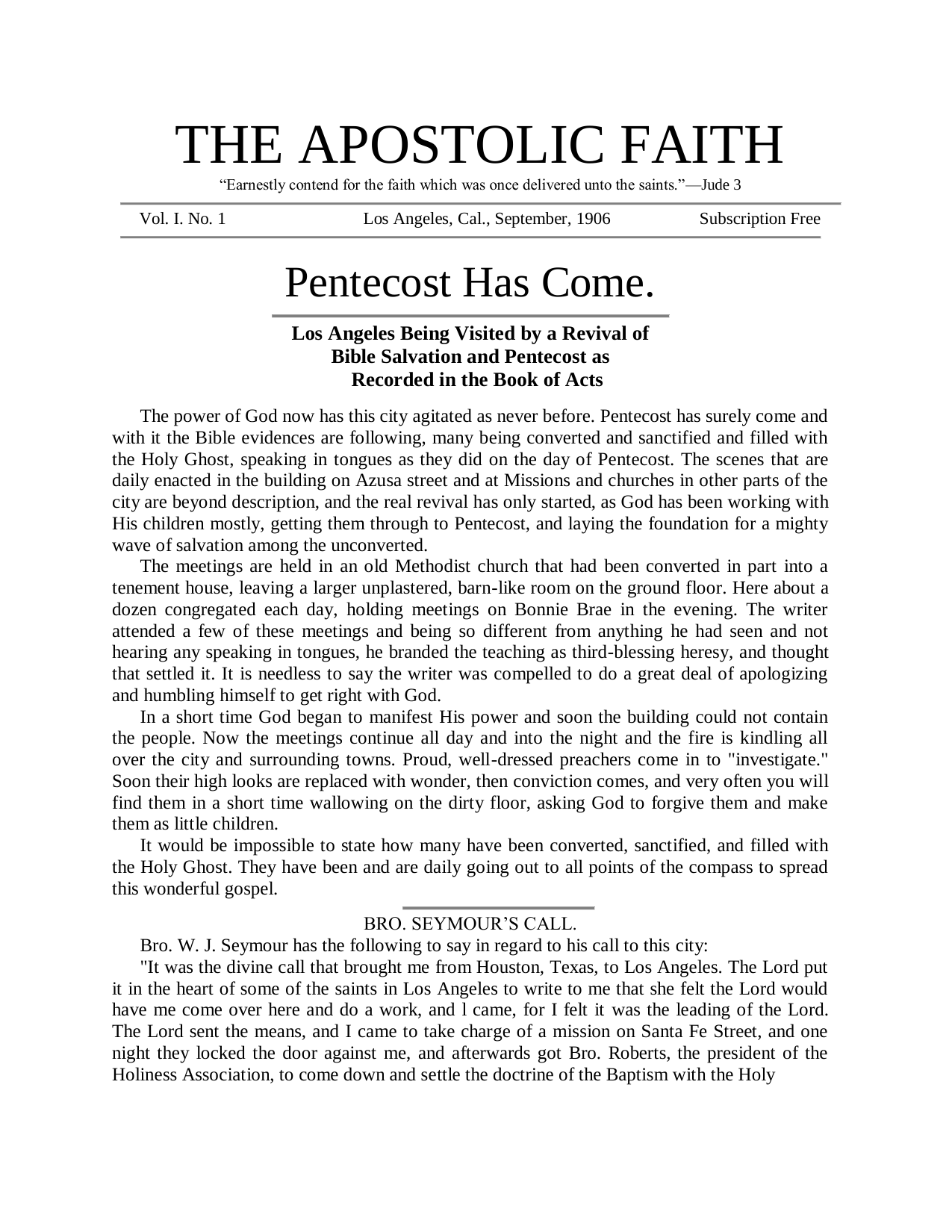
    The power of God now has this city agitated as never before. Pentecost has surely come and with it the Bible evidences are following, many being converted and sanctified and filled with the Holy Ghost, speaking in tongues as they did on the day of Pentecost.

    “It was the divine call that brought me from Houston, Texas, to Los Angeles. … The beginning of the Pentecost started in a cottage prayer meeting at 214 Bonnie Brae.”

    HOLY GHOST SINGING. A song in an unknown tongue was interpreted as follows: With one accord, all heaven rings, With praises to our God and King; Let earth join in our song of praise, And ring it out through all the days.

    The Apostolic Faith, Vol. I, No. 1 · Los Angeles, September 1906 · unsigned mission paper; Seymour in quotation marks · interpreted song anonymous · azusabooks.org PDF of the original paper · masthead Jude 3

    SOURCE

    Los Angeles is reported in Pentecost with Bible evidence of tongues; Seymour says a divine call brought him from Houston; Pentecost began at 214 Bonnie Brae; an unknown-tongue song is interpreted as heaven ringing praise to God and King, earth joining the song.

    The Apostolic Faith, Vol. I, No. 1 · Los Angeles, September 1906 · unsigned mission paper; Seymour in quotation marks · interpreted song anonymous · azusabooks.org PDF of the original paper · masthead Jude 3

    CIAN INTERPRETATION

    The site’s Pentecostal-worship stream as a named 1906 primary, not a later memoir and not an invented Seymour sermon. The interpreted quatrain is the paper’s own English of a tongue-song, not a generated praise-break.

    The Apostolic Faith, Vol. I, No. 1 · Los Angeles, September 1906 · unsigned mission paper; Seymour in quotation marks · interpreted song anonymous · azusabooks.org PDF of the original paper · masthead Jude 3

    MODEL INFERENCE

    Clara Lum / Florence Crawford as publishers is later study, not a SOURCE sentence from this extract.

    The Apostolic Faith, Vol. I, No. 1 · Los Angeles, September 1906 · unsigned mission paper; Seymour in quotation marks · interpreted song anonymous · azusabooks.org PDF of the original paper · masthead Jude 3

    CIAN INTERPRETATIONThe same issue also states that “the Spirit sang songs through them,” and that the Lord “translates old songs into new tongues” and gives “the music that is being sung by the angels.” Those sentences are report, not a second invented lyric.

    The Apostolic Faith Vol. I No. 1, first page — Los Angeles, September 1906, Pentecost Has Come. The Azusa paper, not a portrait.
    The Apostolic Faith Vol. I No. 1, first page — masthead (Jude 3), Los Angeles, September 1906, “Pentecost Has Come.” The Azusa paper, not a portrait. apostolic-faith-1906-sept-p1.png
  2. F. E. Hill, December 1906

    SOURCE

    Do you long to be full of joy and free, To be strong in God and his glory see, Then obey His word and you shall be, Baptized with the Holy Ghost. “Ye shall be baptized,” Jesus said, Baptized with the Holy Ghost. Tarry then until with the power endued, Baptized with the Holy Ghost.

    F. E. Hill · Baptized with the Holy Ghost · The Apostolic Faith Vol. I, No. 4 · Los Angeles, December 1906 · first stanza + chorus as printed

    SOURCE

    The singer is told to obey and will be baptized with the Holy Ghost; Jesus’ “Ye shall be baptized” is the chorus; the seeker is to tarry until endued with power.

    F. E. Hill · Baptized with the Holy Ghost · The Apostolic Faith Vol. I, No. 4 · Los Angeles, December 1906 · first stanza + chorus as printed

    CIAN INTERPRETATION

    A named early Pentecostal chorus in the Azusa paper — not a 21st-c. megachurch song and not a generated praise-break.

    F. E. Hill · Baptized with the Holy Ghost · The Apostolic Faith Vol. I, No. 4 · Los Angeles, December 1906 · first stanza + chorus as printed

    MODEL INFERENCE

    none as to the wording on the fetched page.

    F. E. Hill · Baptized with the Holy Ghost · The Apostolic Faith Vol. I, No. 4 · Los Angeles, December 1906 · first stanza + chorus as printed

    CIAN INTERPRETATIONLater stanzas on the same page name consecration, “This is that” which fell at Pentecost, the gift to the sanctified, and “Ye shall speak with tongues, and shall prophesy.” Not dumped in full.

    The Apostolic Faith Vol. I No. 4, first page — December 1906, PENTECOST WITH SIGNS FOLLOWING. The issue, not the Hill lyric leaf.
    The Apostolic Faith Vol. I No. 4, first page — December 1906, “PENTECOST WITH SIGNS FOLLOWING.” This is the ISSUE, not the Hill lyric leaf. apostolic-faith-1906-dec-p1.png
  3. Tindley, Leave It There

    SOURCE

    If the world from you withholds of its silver and its gold, And you have to get along with meagre fare, Just remember, in his Word, how he feeds the little bird; Take your burden to the Lord and leave it there. Leave it there, leave it there. Take your burden to the Lord and leave it there. If you trust and never doubt, he will surely bring you out; Take your burden to the Lord and leave it there.

    Charles Albert Tindley · Leave It There · New Songs of Paradise, 1916, no. 30 · Hymnary representative text; CPDL: transcribed from that 1916 book · arr. Chas. A. Tindley, Jr. on the 1916 page

    SOURCE

    If the world withholds silver and gold and fare is meagre, remember the bird fed by the Word; take the burden to the Lord and leave it there; trust without doubt and he will bring you out.

    Charles Albert Tindley · Leave It There · New Songs of Paradise, 1916, no. 30 · Hymnary representative text; CPDL: transcribed from that 1916 book · arr. Chas. A. Tindley, Jr. on the 1916 page

    CIAN INTERPRETATION

    Third early Tindley print (1916), still 20th-c. gospel, not a spiritual.

    Charles Albert Tindley · Leave It There · New Songs of Paradise, 1916, no. 30 · Hymnary representative text; CPDL: transcribed from that 1916 book · arr. Chas. A. Tindley, Jr. on the 1916 page

    MODEL INFERENCE

    “ca. 1906” composition vs 1916 print is Hymnary’s author line, not a 1916 colophon on a fetched leaf.

    Charles Albert Tindley · Leave It There · New Songs of Paradise, 1916, no. 30 · Hymnary representative text; CPDL: transcribed from that 1916 book · arr. Chas. A. Tindley, Jr. on the 1916 page

    CIAN INTERPRETATIONNo image. 1916 leaf was not opened as a page-image.

  4. Campbell, Something Within

    SOURCE

    Preachers and teachers would make their appeal, Fighting as soldiers on great battlefields; When to their pleadings my poor heart did yield, All I can say, there is something within. Something within me that holdeth the reins, Something within me that banishes pain; Something within me I cannot explain, All that I know there is something within.

    Lucie Eddie Campbell · Something Within · composed 1919 · first songbook named as Spirituals Triumphant, Nashville, 1927 · Hymnary representative text

    SOURCE

    Preachers and teachers appeal; the heart yields; the refrain is “something within” that holds the reins, banishes pain, and cannot be explained.

    Lucie Eddie Campbell · Something Within · composed 1919 · first songbook named as Spirituals Triumphant, Nashville, 1927 · Hymnary representative text

    CIAN INTERPRETATION

    Early National Baptist gospel by a Black woman composer — not a 19th-c. spiritual and not a 21st-c. CCLI song.

    Lucie Eddie Campbell · Something Within · composed 1919 · first songbook named as Spirituals Triumphant, Nashville, 1927 · Hymnary representative text

    MODEL INFERENCE

    1919 Beale Street / Rosemond story is Walker 1992 via Hymnology Archive (C), not printed on the lyric block.

    Lucie Eddie Campbell · Something Within · composed 1919 · first songbook named as Spirituals Triumphant, Nashville, 1927 · Hymnary representative text

    CIAN INTERPRETATIONThis hymn is NOT in Gospel Pearls 1921. No 1919/1927 leaf image. Gospel Pearls cover sits on the next room, not this song’s leaf.

  5. Campbell, The Lord Is My Shepherd

    SOURCE

    The Lord is my Shepherd, I shall not want; By still waters He leadeth His sheep; Though the enemy gather and foes may oppress, Jesus watches while His little ones sleep. We will walk through the valley, We will walk in peace; We will walk through the valley with Jesus alone; On His rod and His staff through the valley of death, We will walk through the valley in peace.

    Lucie E. Campbell · The Lord Is My Shepherd · composed 1919 · Gospel Pearls, Nashville: Sunday School Publishing Board, NBC, 1921, as named · this extract: AMEC Hymnal page on Hymnary, a later printing

    SOURCE

    The Lord is Shepherd; still waters; enemies gather; Jesus watches the little ones; the refrain walks the valley in peace with Jesus, rod and staff, valley of death.

    Lucie E. Campbell · The Lord Is My Shepherd · composed 1919 · Gospel Pearls, Nashville: Sunday School Publishing Board, NBC, 1921, as named · this extract: AMEC Hymnal page on Hymnary, a later printing

    CIAN INTERPRETATION

    The National Baptist 1921 book is the named print. Campbell’s hymn is 20th-c. gospel using a spiritual refrain, not a re-row of the 1867 spiritual.

    Lucie E. Campbell · The Lord Is My Shepherd · composed 1919 · Gospel Pearls, Nashville: Sunday School Publishing Board, NBC, 1921, as named · this extract: AMEC Hymnal page on Hymnary, a later printing

    MODEL INFERENCE

    “Her one hymn” in Gospel Pearls is Canterbury/UMC bibliography, not a 1921 table of contents opened this pass.

    Lucie E. Campbell · The Lord Is My Shepherd · composed 1919 · Gospel Pearls, Nashville: Sunday School Publishing Board, NBC, 1921, as named · this extract: AMEC Hymnal page on Hymnary, a later printing

    CIAN INTERPRETATION1921 lyric leaf was not opened. UMC notes the hymn draws on the refrain of the spiritual We shall walk through the valley in peace. That spiritual’s 1867 form is Awakening and is not re-rowed here.

    Gospel Pearls cover, Nashville: Sunday School Publishing Board, National Baptist Convention, U.S.A., 1921. The cover, not Campbell’s lyric leaf.
    Gospel Pearls cover · Nashville: Sunday School Publishing Board, National Baptist Convention, U.S.A., 1921. The COVER, not Campbell’s lyric leaf. gospel-pearls-1921-cover.jpg
  6. Shembe, Hymn 3 (copyright, short)

    SOURCE

    Nkosi Nkosi bubusise Lobu buNazaretha Uchoboze izitha zabo Zingabuvukeli. Lord, Lord bless This Nazaretha Church Crush its enemies That they don’t rise against it.

    Isaiah Shembe · Hymn 3 · isiZulu and English as printed by Nkosinathi Sithole, Literator 35(1) (2014), quoting J. G. Shembe, Izihlabelelo ZamaNzaretha, Durban: W. H. Shepherd, 1940

    SOURCE

    The singer asks the Lord to bless this Nazaretha church and crush enemies so they do not rise against it.

    Isaiah Shembe · Hymn 3 · isiZulu and English as printed by Nkosinathi Sithole, Literator 35(1) (2014), quoting J. G. Shembe, Izihlabelelo ZamaNzaretha, Durban: W. H. Shepherd, 1940

    CIAN INTERPRETATION

    The site’s AIC stream from a named edition, not a substitute “African” lyric invented in English.

    Isaiah Shembe · Hymn 3 · isiZulu and English as printed by Nkosinathi Sithole, Literator 35(1) (2014), quoting J. G. Shembe, Izihlabelelo ZamaNzaretha, Durban: W. H. Shepherd, 1940

    MODEL INFERENCE

    1923 Nhlangakazi prayer as the hymn’s occasion is Sithole’s argument (C), not a 1940 colophon on a fetched page.

    Isaiah Shembe · Hymn 3 · isiZulu and English as printed by Nkosinathi Sithole, Literator 35(1) (2014), quoting J. G. Shembe, Izihlabelelo ZamaNzaretha, Durban: W. H. Shepherd, 1940

    CIAN INTERPRETATIONStill in copyright (1940 hymnal). Short extract only. The same block continues “Vuka Vuka wena Nkosi” / “Wake up, wake up, Oh Lord” and names the mountain Nhlangakazi. Not dumped further. No invented Zulu. No 1940 title image.

  7. Dorsey, Precious Lord (copyright, first stanza only)

    SOURCE

    Precious Lord, take my hand, Lead me on, let me stand; I am tired, I am weak, I am worn; Through the storm, through the night, Lead me on to the light, Take my hand, precious Lord, lead me home.

    Thomas A. Dorsey · Take My Hand, Precious Lord · written 1932; first published 1938 · Melody Publications named page · tune adapted from George N. Allen, Maitland

    SOURCE

    The singer asks Precious Lord to take his hand, lead him on, let him stand; he is tired, weak, worn; through storm and night, lead on to the light and home.

    Thomas A. Dorsey · Take My Hand, Precious Lord · written 1932; first published 1938 · Melody Publications named page · tune adapted from George N. Allen, Maitland

    CIAN INTERPRETATION

    The named modern-gospel song, with copyright flagged. Not a 19th-c. spiritual; not a 21st-c. living-catalog song.

    Thomas A. Dorsey · Take My Hand, Precious Lord · written 1932; first published 1938 · Melody Publications named page · tune adapted from George N. Allen, Maitland

    MODEL INFERENCE

    1932 bereavement as occasion is the named histories (C), not a 1938 colophon on a leaf we opened.

    Thomas A. Dorsey · Take My Hand, Precious Lord · written 1932; first published 1938 · Melody Publications named page · tune adapted from George N. Allen, Maitland

    CIAN INTERPRETATIONStill in copyright (1938 / renewed 1965, Unichappell). First stanza only. Do not dump later stanzas. Do not invent stanzas. No 1938 image.

  8. Silouan, Adam’s Lament (copyright, short)

    SOURCE

    My soul wearies for the Lord, and I seek Him in tears. How should I not seek Him? When I was with him my soul was glad and at rest, and the enemy could not come nigh me. … I lift up my voice and cry: ‘Have mercy upon me, O God. Have mercy on Thy fallen creature.’

    Silouan the Athonite · Adam’s Lament · English: Rosemary Edmonds, as printed on the named page attributing Saint Silouan the Athonite / Archimandrite Sophrony

    SOURCE

    The soul wearies for the Lord and seeks him in tears; with him it was glad and at rest; the cry is for mercy on a fallen creature.

    Silouan the Athonite · Adam’s Lament · English: Rosemary Edmonds, as printed on the named page attributing Saint Silouan the Athonite / Archimandrite Sophrony

    CIAN INTERPRETATION

    A named 20th-c. Orthodox witness, not a Black-gospel substitute. Not a 4th-c. Greek Father.

    Silouan the Athonite · Adam’s Lament · English: Rosemary Edmonds, as printed on the named page attributing Saint Silouan the Athonite / Archimandrite Sophrony

    MODEL INFERENCE

    Athos / St. Panteleimon as place is standard life, not a colophon on the blog page.

    Silouan the Athonite · Adam’s Lament · English: Rosemary Edmonds, as printed on the named page attributing Saint Silouan the Athonite / Archimandrite Sophrony

    CIAN INTERPRETATIONStill in copyright (Edmonds / Sophrony 1991 as named). Short extract only. The fetched page frames this as Adam’s cry inside Silouan’s lament, and closes in Silouan’s voice: “I, too, have lost grace and call with Adam.” That frame is on the page; it is not invented. Russian running text was not opened. No image.

  9. Vatican II, Sacrosanctum Concilium

    SOURCE

    112. The musical tradition of the universal Church is a treasure of inestimable value, greater even than that of any other art. The main reason for this pre-eminence is that, as sacred song united to the words, it forms a necessary or integral part of the solemn liturgy.

    116. The Church acknowledges Gregorian chant as specially suited to the Roman liturgy: therefore, other things being equal, it should be given pride of place in liturgical services.

    118. Religious singing by the people is to be intelligently fostered so that in devotions and sacred exercises, as also during liturgical services, the voices of the faithful may ring out according to the norms and requirements of the rubrics.

    119. In certain parts of the world, especially mission lands, there are peoples who have their own musical traditions, and these play a great part in their religious and social life. For this reason due importance is to be attached to their music, and a suitable place is to be given to it, not only in forming their attitude toward religion, but also in adapting worship to their native genius, as indicated in Art. 39 and 40.

    Second Vatican Council · Sacrosanctum Concilium, Chapter VI, arts. 112, 116, 118–119 · official English, vatican.va · promulgated 4 December 1963

    SOURCE

    Sacred song united to words is integral to solemn liturgy; Gregorian chant has pride of place, other things equal; the people’s singing is to be fostered; mission-land musical traditions are to be given a suitable place in adapting worship.

    Second Vatican Council · Sacrosanctum Concilium, Chapter VI, arts. 112, 116, 118–119 · official English, vatican.va · promulgated 4 December 1963

    CIAN INTERPRETATION

    Worldwide Catholic reform of song — the site’s “worldwide praise movements” stream as a conciliar text, not a Black-gospel substitute. SC 119 is the Council’s own mission-lands music paragraph.

    Second Vatican Council · Sacrosanctum Concilium, Chapter VI, arts. 112, 116, 118–119 · official English, vatican.va · promulgated 4 December 1963

    MODEL INFERENCE

    none as to the wording on vatican.va.

    Second Vatican Council · Sacrosanctum Concilium, Chapter VI, arts. 112, 116, 118–119 · official English, vatican.va · promulgated 4 December 1963

    CIAN INTERPRETATIONArt. 112 n. 42: Eph. 5:19; Col. 3:16. Art. 121 on the same page requires sung texts to conform to Catholic doctrine and to be drawn chiefly from holy scripture and liturgical sources. Not dumped in full. No 1963 booklet image. Period photographs of the Council were not used.

  10. Siyahamba (copyright, short)

    SOURCE

    Siyahamb’ ekukhanyeni kwenkos, Siyahamba ekukhanyeni kwenkos’. We are marching in the light of God, We are marching in the light of God.

    Siyahamba · Zulu + English as printed on Wikipedia · 1952 transcription named (Andries van Tonder); 1984 Freedom is Coming, Anders Nyberg · authors of melody and Zulu words unknown on the fetched page

    SOURCE

    The singers march / walk in the light of the Lord / of God. One phrase, repeated.

    Siyahamba · Zulu + English as printed on Wikipedia · 1952 transcription named (Andries van Tonder); 1984 Freedom is Coming, Anders Nyberg · authors of melody and Zulu words unknown on the fetched page

    CIAN INTERPRETATION

    A named 20th-c. African Christian chorus that entered worldwide hymnals — not a 21st-c. Hillsong/Bethel song and not an invented AIC lyric.

    Siyahamba · Zulu + English as printed on Wikipedia · 1952 transcription named (Andries van Tonder); 1984 Freedom is Coming, Anders Nyberg · authors of melody and Zulu words unknown on the fetched page

    MODEL INFERENCE

    1952 Dundee as earliest documented performance is Gorelik 2020 via Wikipedia (C), not a 1952 leaf.

    Siyahamba · Zulu + English as printed on Wikipedia · 1952 transcription named (Andries van Tonder); 1984 Freedom is Coming, Anders Nyberg · authors of melody and Zulu words unknown on the fetched page

    CIAN INTERPRETATIONStill in copyright as to the 1984 Nyberg arrangement. Short extract only. Wikipedia prints a longer zipper with “ooh / hamba” repeats and an Afrikaans column. Not dumped. No invented Zulu. No Nyberg 1984 or 1952 Natal leaf image.

Named gaps. Not copy.

  • 1905 Soul Echoes leaves; Azusa photograph download failed; Campbell 1919/1927 leaves; Campbell 1921 lyric leaf; Dorsey 1938 leaf; Shembe 1940 leaf; Kimbanguist/Aladura/Zionist; Taizé; Crouch; Cleveland; Ethiopian 20th-c.; Latin American/Asian pre-CCLI; Tindley The Storm Is Passing Over.

Listen

Recordings

No recordings published yet

This era is documented but not yet recorded. The lineages below describe what it holds.

Traditions within this era

Lineages

  • Black Gospel

    Early twentieth-century United States · North America

    From Thomas A. Dorsey through Mahalia Jackson and the modern gospel movements, a distinctly Black Christian musical tradition of praise, testimony, and endurance.

    English